Three small words hold the power to reach into the deepest, most quiet corners of a human heart: Are you OK?
We hear this question almost every day. It is tossed casually across office desks, typed quickly into text messages, and spoken in grocery store aisles. Yet, most of the time, it passes by like a whisper in the wind. We rarely stop to listen to what is really being said, and we almost never answer with the honest truth.
Our mornings usually begin in a blur. We hurry out the door, step onto crowded trains, sit in traffic, or rush through quiet kitchens with coffee in hand. We walk past dozens of faces, each one carrying a deep, hidden story that the rest of the world will never know. At the same time, our thumbs flick across cold glass screens, scrolling through bright pictures and smiling photos of people we barely know. We watch their celebrations, their clean homes, and their happy milestones, quietly telling ourselves a dangerous lie: that everyone else has figured out how to live without pain, and that we are the only ones struggling just to breathe.
Because of this lie, we learn how to disguise our pain. We pull on a warm smile before opening the door, wearing it like a shield of armor so nobody can see how bruised our spirits really are. We fill our calendars until they overflow, rushing from one task to another, wearing our busy lives like a badge of honor. We secretly hope that if we just run fast enough, nobody will notice the cracks spreading across our hearts.
Then comes the familiar moment. A friend, a coworker, or a neighbor looks our way and asks, “How are you doing?”
Before our minds can even process the pain we carried all morning, the automatic answer jumps out: “I’m fine.”
It is a shield we use to keep ourselves safe. It keeps the conversation polite and short. It saves us from an awkward silence. Most of all, it protects us from our greatest fear—the fear that if people see how tired, fragile, or broken we truly feel, they will look away, judge our weakness, or think we are too heavy a burden to love.
Yet behind closed doors, away from the chatter and the bright lights, the truth waits.
Beneath the polite nods and the cheerful replies, countless souls are walking through life carrying invisible, crushing weights. You might know what that feels like. It is the suffocating quiet of a room after the front door clicks shut at night. It is the heavy, tight ache in your chest that turns an ordinary breath into a difficult climb. It is the exhaustion that stays in your bones no matter how many hours you sleep.
We live in a culture that honors perfection. We are told to keep pushing, never let them see you sweat, and stay positive at all costs. But pretending to be whole does not heal an aching soul. It only buries the hurt deeper down, where it stays cold and alone in the dark.
We need to pause and ask ourselves: What does it truly mean to be OK?
Somewhere along the way, we started believing that being OK means having a perfect, painless life. We thought it meant our bank accounts are full, our relationships are flawless, our tears are wiped away, and our minds are completely free from worry.
That was never the true meaning of the word.
To be OK does not mean that the storm has passed. It simply means you are still standing in the rain, refusing to be washed away. It means you took a single breath this morning, placed your feet onto the floor, and chose to keep moving, even when your legs felt heavy like lead. If all you did today was get out of bed, drink a glass of water, and survive until the sun slipped below the horizon, you have achieved something magnificent. Survival is not defeat; survival is courage in its purest form.
Even so, there are seasons when we are honestly not fine. There are seasons when our hands shake too much to hold things together. There are times when grief hangs over our days like a dark cloud that will not lift, when loneliness feels like a cold room with no door, or when the road ahead looks completely black. In those quiet, desperate hours, forcing a smile becomes a poison. We need to lay the mask down.
In 1 Peter 5:7, the Bible gives us a tender sanctuary for our tired hearts: “Cast all your anxiety on Him, because He cares for you.”
Notice what God asks of you. He does not ask for a neat, well-spoken prayer. He does not ask you to clean yourself up, hide your doubts, or pretend you have everything under control before you approach Him. He simply asks for the truth. He asks you to take the heavy, jagged stones you have been carrying in your chest—the shame, the exhaustion, the quiet fears—and place them into His open, loving hands. You were never built to hold the weight of this world alone.
Admitting that you are hurting is not giving up. It is the bravest thing a human being can do. It requires immense strength to look someone in the eye and say, “I am hurting, and I don’t know how to fix it.”
When you share your pain, you give the people who love you the gift of drawing close to you. You break the quiet lie that you are a burden. You are never an unwanted burden to the people who truly care about your heart, and you are certainly never a burden to the God who formed you.
Look closely at the people around you today. Behind the tidy clothes, the polite answers, and the nervous laughter, someone near you is silently crying out for help. They are waiting for someone to notice. They are looking for a soft place to fall apart.
Take a moment to slow down. Look past the busy schedule. Look someone in the eyes, ask the question, and truly mean it: “Are you OK?” When they start to give you the usual answer, gently wait. Give them room to be real. A single moment of listening can pull someone back from the edge of despair.
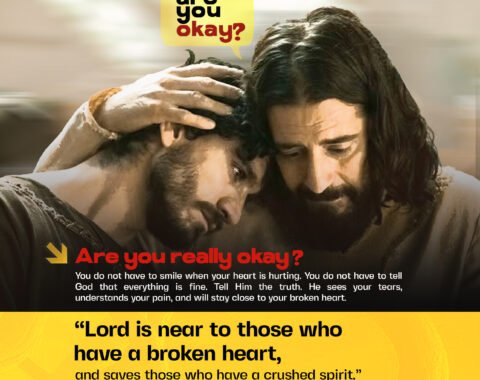
If you are reading these words right now and your own heart is breaking under a quiet sorrow, receive this gentle truth deep into your soul: You do not have to be OK today.
You do not need to perform strength for an audience. You do not need to rush your healing or figure out what tomorrow will look like. It is completely safe to rest right where you are, with all your messy thoughts and quiet tears. Breathe through this very hour. Be kind to yourself today.
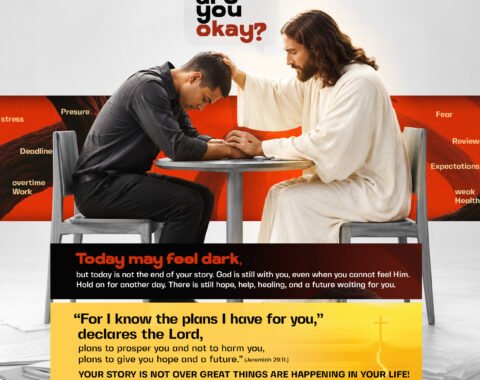
You do not have to have your whole life sorted out this afternoon, but you also will not be trapped in this valley forever. Dawn always follows the longest night. Help is closer than you think, hope is reaching out for your hand, and you will never, ever have to walk this road alone.
God bless you abundantly.